You Don’t Have a SOAP Note Problem. You Have a Time Problem.
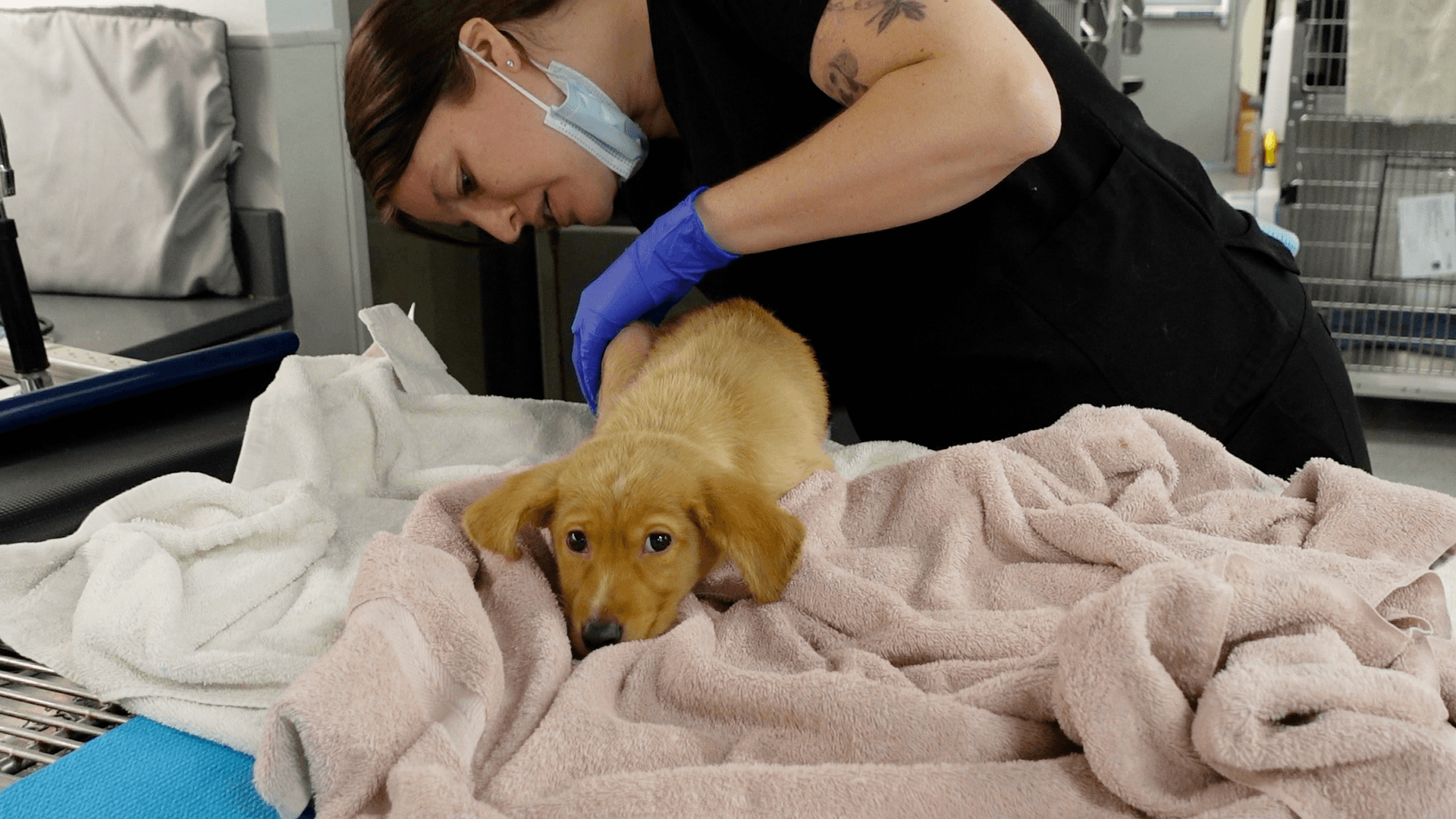
Why better veterinary SOAP notes have less to do with templates and more to do with when you write them.
Let’s be honest: nobody in veterinary medicine needs another tutorial on what SOAP stands for. You learned that in school. You’ve been doing it for years. If you’re reading this, it’s probably not because you forgot what goes in the Objective section.
It’s because you’re exhausted.
You’re finishing your last appointment at 6 PM and still have eight charts to close out. You’re scribbling notes on your hand between rooms. You’re sitting in your car in the parking lot trying to remember what Mrs. Patterson’s Labrador’s temperature was before you drive home to do more charting on the couch.
The veterinary industry loses an estimated $2 billion annually to burnout, and documentation is one of the biggest contributors. Research presented at VMX found that vets spend two to four hours per day on paperwork alone. That’s up to half a working day, every single day.
So no, this isn’t another article that defines Subjective, Objective, Assessment, and Plan and calls it a day. Instead, we’re going to talk about the five habits that actually make a difference in the quality of your notes, without stealing more of your time.
1. Write at the Point of Care, Not From Memory
This is the single biggest factor separating clear, reliable SOAP notes from ones that are thin, padded, or missing important details. And it has nothing to do with skill.
When you document hours after a visit, you’re reconstructing, not recording. The brain fills in gaps, smooths over uncertainty, and drops the small details that turn out to matter. That’s when you end up with an Assessment that says “vomiting, r/o GI upset” with no supporting reasoning, or a Plan so vague that no one (including you next Tuesday) knows what was actually decided.
The fix isn’t to type faster between appointments. It’s to capture notes in the moment, even imperfectly, so the raw material is there when you’re ready to finalize.
Some vets jot keywords on paper. Some use voice memos. And increasingly, many are turning to voice-powered AI documentation that captures what’s said during the appointment and structures it automatically, so the SOAP note is essentially drafted before the patient leaves the room.
“I 100% rely on it. Manta has made everything much less chaotic. Now I have all my records completed by the end of the day.” - Tamara C., DVM |
2. Keep Each Section in Its Lane
You already know the four sections. The issue is that in practice, they blur together, especially under time pressure. Owner observations leak into the Objective. Diagnoses show up in the Subjective. The Plan becomes a sentence fragment.
The clearest SOAP notes treat each section as answering one specific question:
Subjective | What brought them in? What is the owner experiencing at home? |
Objective | What did I observe, measure, or test? |
Assessment | Based on the above, what do I think is happening and why? |
Plan | What are we doing about it, and what comes next? |
Here’s what this looks like in practice. Consider a routine presentation: a dog with a two-day history of soft stool:
S: Owner reports soft stool for two days, increased frequency (3–4x daily vs. normal 2x). No blood or mucus noted. Eating and drinking normally. No dietary changes, table scraps, or known garbage access. Up to date on vaccines and preventatives. O: T 101.8°F. HR 100 bpm. RR 22. Weight 62.4 lbs (stable). Abdomen soft, mild gas palpated, no pain on palpation. No dehydration. Bright, alert, responsive. A: Acute large bowel diarrhea, mild. Most likely dietary indiscretion or transient colitis. No systemic signs or evidence of infectious etiology at this time. P: Metronidazole 15 mg/kg PO BID × 5 days. Bland diet (boiled chicken/rice or GI-formula food) for 5–7 days with gradual transition back. Probiotics recommended. Recheck if not improving in 48–72 hours or if blood/lethargy develops. Fecal submitted; results pending. |
Notice how no information repeats across sections, interpretation stays in the Assessment, and the Plan is specific enough that a covering vet could pick it up cold.
3. Your Assessment Should Show Your Thinking, Not Just a Diagnosis
The Assessment is the most underwritten section in veterinary SOAP notes. In a rush, it often becomes a single line (a diagnosis or a code) with nothing connecting it to the Subjective and Objective findings above.
But this is the section where your clinical reasoning lives. It’s what tells the next provider (or future you) why you made the decisions you made. A strong Assessment does three things: it names the working diagnosis or differentials, it briefly references the evidence supporting that conclusion, and it acknowledges what you’ve ruled out or what remains uncertain.
You don’t need to write a paragraph. Even two sentences that connect the dots are far more valuable than a bare diagnosis standing alone.
Weak vs. Strong Assessment:
A: Diarrhea. |
vs.
A: Acute large bowel diarrhea, mild. Likely dietary indiscretion or transient colitis given sudden onset, normal vitals, and absence of systemic signs. Infectious etiology less likely given current preventative status; fecal pending to confirm. |
The second version takes maybe 15 extra seconds to write (or zero extra seconds if your AI scribe captured the reasoning from what you said aloud). But it’s exponentially more useful.
4. Write the Plan for the Person Who Reads It Next
This might be a colleague covering your day off. It might be you, three weeks from now, with no memory of this appointment. Either way, the Plan should answer: what exactly was done, what was prescribed, what should the owner do at home, and what triggers a recheck?
Vague plans generate callbacks. Specific plans generate confidence, in your team and in your clients.
Common Plan pitfalls:
“Recheck PRN” ...PRN when? Based on what?
“Discussed options with owner” ...What options? What did they choose?
Listing medications without dose, route, or duration
Skipping the client education component entirely
A one-minute investment in a specific Plan saves 10 minutes of phone tag later. And if you’re generating plans from a voice recording, the specifics are already captured. You just review and approve.
5. Use Templates as Guardrails, Not Autopilot
Templates are genuinely helpful. They ensure you don’t skip key fields, they create consistency across providers, and they speed things up for routine visits. We’re fans.
But templates can also become a crutch. When every note looks identical regardless of the case, clinical reasoning disappears and notes start to feel like forms: checked boxes rather than medical records. The worst version of this is a wellness exam template copy-pasted into a sick visit, with half the fields irrelevant and the important details buried.
The best approach? Use templates as a starting structure, then customize for the case. Or better yet, use AI-powered documentation that generates a case-specific draft from what actually happened in the appointment, so you get the consistency benefits of a template with the clinical accuracy of a note written in real time.
“Manta has saved me a ton of time, and I really like the simplicity of the app. I tried half a dozen AI apps before Manta, and none of them compare!” - Lori N., DVM |
The Bigger Picture: Documentation Shouldn’t Cost You Your Career
Over 50% of veterinarians report moderate to high levels of burnout. And while documentation isn’t the only contributor, it’s one of the most fixable ones.
You became a veterinarian to help animals and support the people who love them. The hours you spend reconstructing notes from memory at 10 PM aren’t making you a better clinician. They’re draining the energy you need to be one.
Better SOAP notes aren’t about perfection. They’re about capturing your clinical thinking while it’s fresh, keeping your records clear and consistent, and reclaiming the time that documentation has been quietly stealing from you.
“Manta lets me get home on time to put my son down for bed. That wasn’t possible before. I’d always have to stay hours late.” - Hannah B., DVM |
How Manta Fits In
Manta is an AI-powered veterinary documentation assistant built by a team that includes a practicing emergency veterinarian. It was designed around a simple idea: if you can say it, you shouldn’t have to type it too.
Speak naturally during or right after an appointment. No scripts, no special format
Manta’s veterinary-trained AI transcribes, summarizes, and structures your notes into clean records
Fully customizable templates adapt to your style, not the other way around
Export to your PIMS in one click
Multilingual support: record in Spanish, get your notes in English (or vice versa)
HIPAA-compliant with zero data retention
Starting at $29.99/month with a 14-day free trial. No credit card. No long-term contract. Just less paperwork.